
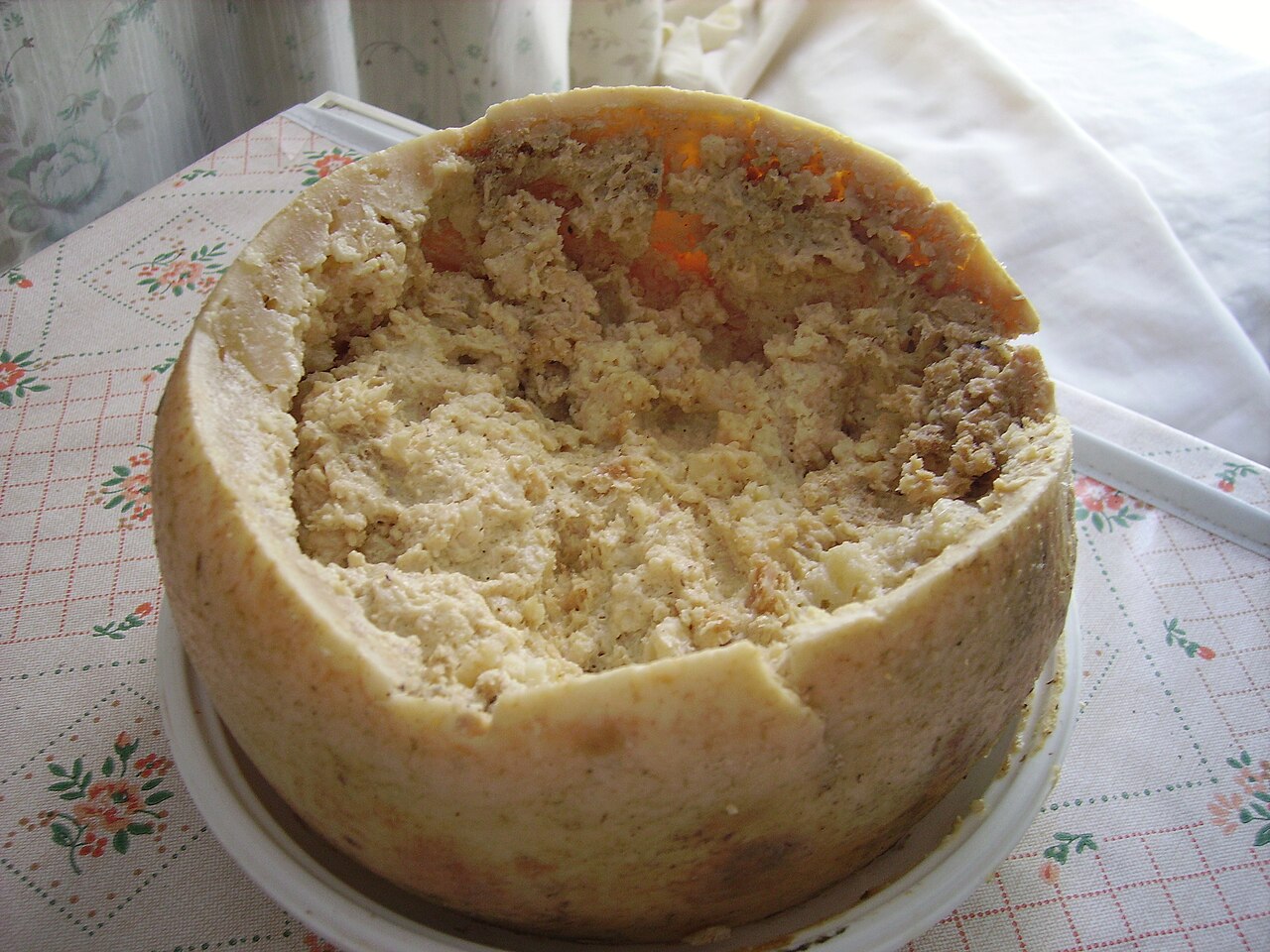
The larvae of the cheese fly (Piophila casei) are deliberately introduced to pecorino cheese, where their digestive action produces an advanced level of fermentation, including a breakdown of the cheese’s fats. The cheese’s texture softens, and a liquid called làgrima (‘teardrop’) may seep out.
Source: Wikipedia.
I’m willing to try every food once, but my only hard requirement is that it really shouldn’t feature multicellular life.
What do you eat then? Spirulina? Yeast?
Mostly dead things, I presume.
Somehow cheese with dead maggots in it doesn’t sound much more appealing.
Ehhhhh, I’ve had dead insects before. It wasn’t great, but like I said, try everything once
Well, no. They say if the maggots are dead, the cheese isn’t safe to eat.
I eat lots of dead multicellular organisms, and no living ones.
Oh yes you do!
Nope, as long as I deny it, it’s not true! Deciding your own reality is all the rage right now.
Lmao, even zooplankton is multicellular, maybe he meant macroscopique Multicellular life? But then a steak is from a multicellular form of life
I mean currently-living. I’m obviously fine with dead multicellular organisms.
Aren’t some uncooked vegetables still kinda alive when you eat them? Or yeasts?
My man has never tried Gagh and it shows
I’ll take some plomeek soup thanks.
Spicy ok?
No oysters huh?
Not raw/live ones, no.
Quite the opposite for me, I pretty much only eat multicellular life. Just had a carrot.
I’m good, thanks.
Ah, you don’t have your safety glasses?
Up and atom!
I’m good, thanks.
Because the larvae in the cheese can launch themselves distances up to 15 centimetres (6 in) when disturbed, diners hold their hands above the sandwich to prevent the maggots from leaping.
I’m good, thanks.
There’s plenty of delicious cheese, I can skip this one. 😂
I see your maggot cheese and raise you “Cheese made with sheep poo juice”
https://charlieturnbull.com/texel-cheese/It is possible that the larvae could survive in the intestine, causing enteric pseudomyiasis,[2] which can manifest as nausea, vomiting and gastrointestinal upset;[3] however, no cases have been linked to the cheese.[4] Additionally, these larvae can carry harmful microorganisms that may lead to infections. Due to these risks, Italian authorities have banned the sale of this cheese, deeming it dangerous. Consequently, it is also prohibited across the European Union, as EU food safety regulations mandate that only food safe for consumption can be sold.[2]