

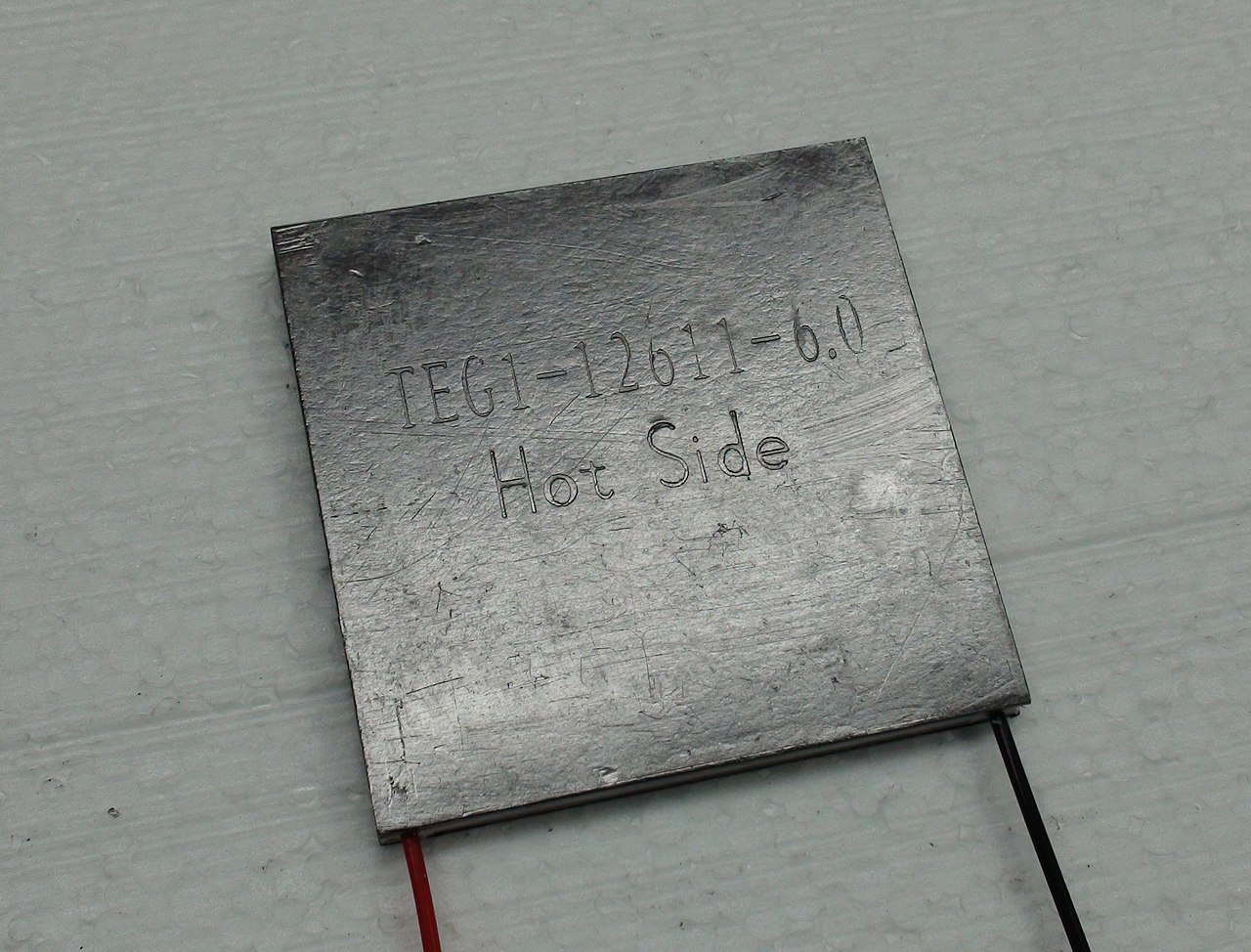
The Thermoelectric effect (TE) comes in two variants:

- The Seebeck effect makes it possible to turn a heat flow (based on a temperature difference) into electric power.
- The peltier effect does the reverse: it turns an electric current into a temperature difference across the two sides of the device.
The fundamental mechanism is a p-n-transition. So you have two different semiconducting materials, which means that the electrons are on different energy levels on both sides. When the electrons move from one side to the other, they have to absorb energy from the environment to get on the higher energy level themselves (p->n transition), or they give off energy (n->p transition), thus cooling or heating the environment.
With this technology, it is possible to build solid-state heat pumps that generate a temperature difference from an electric current with no moving parts! (i don’t know about efficiency or cost)
I’ve experimented with these a lot for cooling, and the fundamental problem is that they are most efficient when the temperature drop across them is 0. This means the use case for them is quite limited - basically when you want something small with no moving parts, you can get rid of the heat well (big heatsink on the hot side), and you don’t want it that cold that fast.
ok but what if you stack multiple of them on top of another? then the temperature drop across each one is rather small but since they stack, it adds up. would that be a possibility?