A new Harvard Chan School study shows it’s the quality—not quantity—of macronutrients that make a difference for heart health, debunking myth that modulating carbohydrate and fat intake alone is inherently beneficial.
Like the gold star recommendation is 9-11 servings of fruits and vegetables daily. After which there’s no significant health advantage to consuming more plants.
Being an omnivore is the tits. Animal foods are super nutrient dense, so you really don’t need a whole lot, anyways.
People tend to love my cooking, but if there’s one complaint I get (fairly often) it’s “needs more meat.”(I’m in USA) IMO, plates should look like a garden, full of colors and diversity, and obviously plant-forward.
I’d suggest something like ~1 lb of veggies (several servings) to ~.25 lb (single-serving) of meat. That’s my ideal ratio, anyways. If you follow that guideline for every meal you’ll easily get 12 servings of vegetables and about three servings of high-quality meat protein.
And fatty fish is a really big deal. Try to get at least a couple servings a week. ALA doesn’t meaningfully convert into DHA nor EPA… I like canned salmon (or sardines, mackerel, herring, etc) for this. Also the occasional offal is excellent, the liver being ‘nature’s multivitamin.’
And save bones for stocks. All that cartilage and collagen and marrow and glucosamine and chondroitin and calcium and so many nutrients and minerals in the bones! And of course you need a bunch of carrots and celery and onions and garlic and potatoes to go with the stock! Maybe some lentils or whatever.
The tuna in EVOO you buy at the supermarket here is lame. If you look at the ingredients it’s just cheap vegetable oil with a dash of EVOO, and you can bet it’s not the good EVOO.
you’re right, it’s bullshit marketing and it sucks. The front of the tin does say “tuna in olive oil blend”, in fairness. All the other brands are the same / similar.
If it was real, pure olive oil it would cost more.
I just buy the stuff packed in spring water, drain it, and pour olive oil over it.
Eat a bunch of that, even if you don’t want to. And then you can literally eat all you want of anything else. You just won’t want to eat much of anything else, because it takes forever to digest legumes and leafy greens.
The “problem” is that stuff is cheap as fuck and there’s no way for anyone to make any money off telling people to do that
i should have said “for me,” edited. i’m not deathly allergic, but enough to get a reaction in my mouth and wreck my gut. wish i wasn’t, because i love them
I really, really struggle to decide what to eat. I think it’s a neurodivergence thing. I’ve often wished there was some bullshit soylent kind of thing I could consume instead of food.
Aren’t oats supposed to be pretty good too? Although they are fairly high in carbs. Far cheaper than legumes, can get a kg of dry oats for about £0.50 while a similar amount of chickpeas is around 4 times that price.
Problem is if I simmer some oats in water and a pinch of salt then add some fruit my partner says it isn’t a proper dinner.
This is where the data meets an uncomfortable impasse. Hispanics in the U.S. live a lot longer than whites. It’s not because of socio-economics. Hispanics eat a lot of meat, too. It is theorised that their legume heavy diet might be responsible. Meaning that, despite eating a lot of carbs, they still live longer. I suspect longevity effects are primarily related to the fibre. This might be true in the study linked. Perhaps it isn’t the low carb/low fat part which gave heart benefits, but the higher fibre intake.
As for the mechanisms:
Fibre binds bile acids, which increases bile acid secretion. The liver uses LDL to make more bile acid, reducing LDL.
Fibre acts as a glucose release modulator. Glucose spikes are responsible for a range of immediate and systemic issues. Reducing overall glucose consumption and especially spikes results in lower risk of type 2 diabetes, metabolic syndrome, and atherosclerosis progression.
Lower blood pressure (we’re not really sure why yet).
Fermentable fibres are metabolized by gut bacteria into short-chain fatty acids. These reduce systemic inflammation, improve gut barrier integrity, improve insulin sensitivity, and regulate immune function. The inflammation one in particular could explain a great deal of the health benefits.
The cancer risk specifically decreases because of dilution and faster transit of carcinogens, SCFA production (especially butyrate, which has anti-tumor properties), and reduced insulin and IGF-1 signalling.
Fibre keeps you full for longer, reducing the risk of obesity.
Quite right, and this is the problem with correlational studies like that linked: they’re observational. We can’t do controlled studies on humans, so we try very hard to control for confounds.
If that doesn’t work, you could also unplug them and plug them back in again. It’s approximately what Jesus suggested for certain issues related to impulse control.
Yeah, leafy greens and legumes are good because there’s a bunch of extra vitamins.
Oatmeal (especially fortified) has a bunch of other stuff tho.
Like, don’t literally only eat a few things. Anything high in fiber keeps you full for a long time.
Especially for the dudes, eating fiber is a very easy preventative measure for colo-rectal cancer. And it’s hard to look at the correlation between modern low fiber high processed food diets and the skyrocketing rates of colo-rectal cancer and say there’s zero correlation.
But convincing people to eat fiber gets a weird amount of opposition
But convincing people to eat fiber gets a weird amount of opposition
I haven’t seen much. It’s usually when it comes in the form of vegan evangelism and moralising. “Eat a balanced diet which include meat and veggies” is about as milquetoast a message as you can get with very little opposition. In fact, the new U.S. food pyramid is exactly that. Reception has been very good. It’s not perfect, but it’s a hell of a lot better than the old one.
“I don’t like the messenger so I’m going to reject their proposal for a healthy diet.”
Cool story, bro. I hope you enjoy your cheeseburgers and diabetes. It suggests a healthy diet of protein, vegetables, and healthy fats. I presume that would be an immense improvement over yours.
I’ve seen quite a surprising amount of oposition to fiber specifically here on Lemmy. It comes completely unrelated to any vegan discussions. It’s kinda wierd, to be honest.
Well it can be trickier than you might think. The general advice is to get 30 grams a day. I tried that, and I ended up having to overeat by quite a bit to achieve that number. Then I realized that number was not meant for me, it was for men who are at least twice my size. I probably only need 15 grams a day, which I was probably already getting. But that “30 grams” recommendation is everywhere. There’s also two different types of fiber, and you might need more of one than the other depending on your individual biome. I think most people would benefit from a more tailored recommendation or plan.
I also have a theory that fiber does not interact well with IBS, and that there may be some number of folks who don’t know they have it. Personally, I can’t digest leafy greens at all. I would eat them if I could, because it often feels like some personal failure and that I’m going to die early since I can’t. But if the undigested bits get stuck in my intestinal pockets, I end up in the hospital. 🤷
Oats are very much a thing in the US. Quite common. Stores sell rolled oats, steel cut oats and sugary packaged oats. The trick is buying the rolled/steel cut and not the packaged sugar garbage.
Talk about word salad. Pun intended. A better title might have been something like “Low-carb and low-fat diets associated with lower heart disease risk in certain cases” and let the reader figure it out.


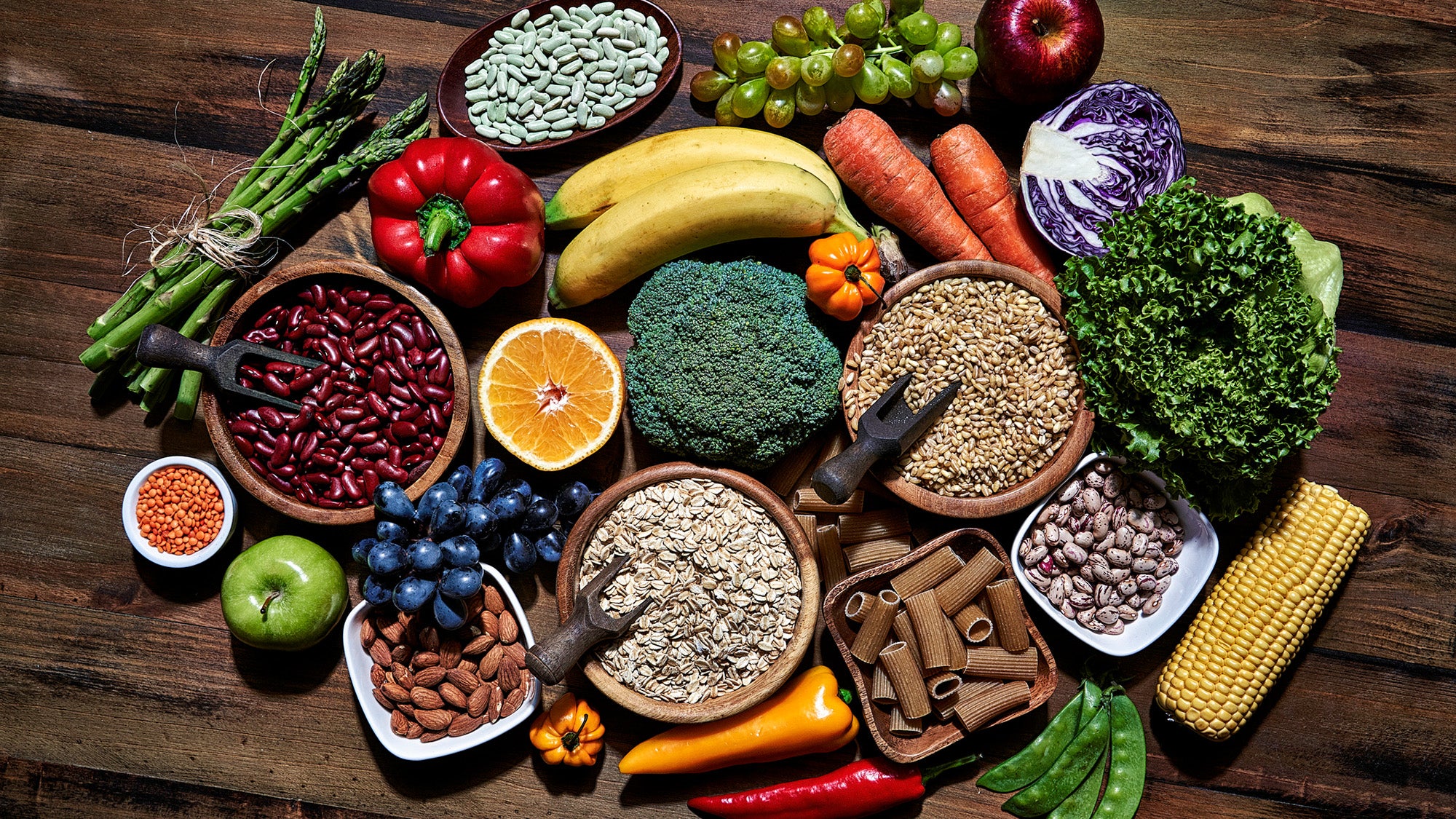
What a title…… what do I eat now?!
Plain canned tuna
[…]
It says ‘low in’ not ‘absent’.
Like the gold star recommendation is 9-11 servings of fruits and vegetables daily. After which there’s no significant health advantage to consuming more plants.
Being an omnivore is the tits. Animal foods are super nutrient dense, so you really don’t need a whole lot, anyways.
People tend to love my cooking, but if there’s one complaint I get (fairly often) it’s “needs more meat.”(I’m in USA) IMO, plates should look like a garden, full of colors and diversity, and obviously plant-forward.
I’d suggest something like ~1 lb of veggies (several servings) to ~.25 lb (single-serving) of meat. That’s my ideal ratio, anyways. If you follow that guideline for every meal you’ll easily get 12 servings of vegetables and about three servings of high-quality meat protein.
And fatty fish is a really big deal. Try to get at least a couple servings a week. ALA doesn’t meaningfully convert into DHA nor EPA… I like canned salmon (or sardines, mackerel, herring, etc) for this. Also the occasional offal is excellent, the liver being ‘nature’s multivitamin.’
And save bones for stocks. All that cartilage and collagen and marrow and glucosamine and chondroitin and calcium and so many nutrients and minerals in the bones! And of course you need a bunch of carrots and celery and onions and garlic and potatoes to go with the stock! Maybe some lentils or whatever.
Delicious mercury
solid yellowfin packed in EVOO topped with tony chachere’s creole seasoning = better than anything you’ll get for $15 at a burger joint
The tuna in EVOO you buy at the supermarket here is lame. If you look at the ingredients it’s just cheap vegetable oil with a dash of EVOO, and you can bet it’s not the good EVOO.
i mean i wouldn’t debate about “not the good EVOO,” but…
edit: looking at your instance now, i guess you’re in aus? that sucks they’re mixing yours will bullshit oil
this is ours:
you’re right, it’s bullshit marketing and it sucks. The front of the tin does say “tuna in olive oil blend”, in fairness. All the other brands are the same / similar.
If it was real, pure olive oil it would cost more.
I just buy the stuff packed in spring water, drain it, and pour olive oil over it.
the best way to do it, since even if you drain the oil tuna, you’ll still be consuming a non-zero amount of crap ultraprocessed shit oil
Unless it says extra virgin olive oil, the olive oil itself might even be highly processed.
Yeah, there’s a lot to good EVOO.
Here i wouldnt really trust anything I can get from the supermarket, and certainly not anything imported.
The health benefits diminish significantly over time.
So the “best before” date might be 2 years, but if you want the health benefits then every month counts. Also the time spent in contact with air.
High-quality plant-based foods.
All meat or all vegetables, nothing in between
Fiber.
Specifically leafy greens and legumes.
Same answer it’s always been.
Eat a bunch of that, even if you don’t want to. And then you can literally eat all you want of anything else. You just won’t want to eat much of anything else, because it takes forever to digest legumes and leafy greens.
The “problem” is that stuff is cheap as fuck and there’s no way for anyone to make any money off telling people to do that
Legumes aren’t low carb no one can afford to eat enough leafy greens to meet their caloric intake for the day
Do you think it’s normal to eat one item exclusively all day every day?
I agree - it was a terrible suggestion…
nuts are good too (not peanuts), but expensive AF
What is wrong with peanuts? And yeah so expensive. Also high energy density means I find it easy to eat far too many kcal when snacking on cashews.
i should have said “for me,” edited. i’m not deathly allergic, but enough to get a reaction in my mouth and wreck my gut. wish i wasn’t, because i love them
I keep trying but somehow always end up with highly salted or suugar coated garbage.
I have a cup of green lentils for breakfast and another one for lunch. Huge fan.
How long does your 1 lentil for lunch keep you full for?
It’s a big freakin’ lentil.
Do you chug it from the can or add some spices?
I buy them raw and cook them with spices, yeah.
Are you joking?
How do you prep this?
I really, really struggle to decide what to eat. I think it’s a neurodivergence thing. I’ve often wished there was some bullshit soylent kind of thing I could consume instead of food.
I wish bachelor chow from Futurama was real
Aren’t oats supposed to be pretty good too? Although they are fairly high in carbs. Far cheaper than legumes, can get a kg of dry oats for about £0.50 while a similar amount of chickpeas is around 4 times that price.
Problem is if I simmer some oats in water and a pinch of salt then add some fruit my partner says it isn’t a proper dinner.
Oats are almost pure carbs.
This is where the data meets an uncomfortable impasse. Hispanics in the U.S. live a lot longer than whites. It’s not because of socio-economics. Hispanics eat a lot of meat, too. It is theorised that their legume heavy diet might be responsible. Meaning that, despite eating a lot of carbs, they still live longer. I suspect longevity effects are primarily related to the fibre. This might be true in the study linked. Perhaps it isn’t the low carb/low fat part which gave heart benefits, but the higher fibre intake.
As for the mechanisms:
Fibre binds bile acids, which increases bile acid secretion. The liver uses LDL to make more bile acid, reducing LDL.
Fibre acts as a glucose release modulator. Glucose spikes are responsible for a range of immediate and systemic issues. Reducing overall glucose consumption and especially spikes results in lower risk of type 2 diabetes, metabolic syndrome, and atherosclerosis progression.
Lower blood pressure (we’re not really sure why yet).
Fermentable fibres are metabolized by gut bacteria into short-chain fatty acids. These reduce systemic inflammation, improve gut barrier integrity, improve insulin sensitivity, and regulate immune function. The inflammation one in particular could explain a great deal of the health benefits.
The cancer risk specifically decreases because of dilution and faster transit of carcinogens, SCFA production (especially butyrate, which has anti-tumor properties), and reduced insulin and IGF-1 signalling.
Fibre keeps you full for longer, reducing the risk of obesity.
There can be many more factors influencing lifespan than just diet, though.
Quite right, and this is the problem with correlational studies like that linked: they’re observational. We can’t do controlled studies on humans, so we try very hard to control for confounds.
Or they just don’t eat processed crap.
My eyes are bad and I read that cats are pretty good. And I surmised that they are high in carbs. because of what the mice they caught had eaten.
Turn your eyes off and back on again to perform a factory reset
If that doesn’t work, you could also unplug them and plug them back in again. It’s approximately what Jesus suggested for certain issues related to impulse control.
greek yogurt mixed with uncooked oats is good. it’s chewy. and the carbs in the oats helps to feed the probiotics in the yogurt–good for gut health
Yeah, leafy greens and legumes are good because there’s a bunch of extra vitamins.
Oatmeal (especially fortified) has a bunch of other stuff tho.
Like, don’t literally only eat a few things. Anything high in fiber keeps you full for a long time.
Especially for the dudes, eating fiber is a very easy preventative measure for colo-rectal cancer. And it’s hard to look at the correlation between modern low fiber high processed food diets and the skyrocketing rates of colo-rectal cancer and say there’s zero correlation.
But convincing people to eat fiber gets a weird amount of opposition
I haven’t seen much. It’s usually when it comes in the form of vegan evangelism and moralising. “Eat a balanced diet which include meat and veggies” is about as milquetoast a message as you can get with very little opposition. In fact, the new U.S. food pyramid is exactly that. Reception has been very good. It’s not perfect, but it’s a hell of a lot better than the old one.
Not downloading a PDF…
But anyone advocating for RFKs inverted food pyramid really shouldn’t be listened to on health issues.
“I refuse to look at text on the internet.”
“I don’t like the messenger so I’m going to reject their proposal for a healthy diet.”
Cool story, bro. I hope you enjoy your cheeseburgers and diabetes. It suggests a healthy diet of protein, vegetables, and healthy fats. I presume that would be an immense improvement over yours.
I’ve seen quite a surprising amount of oposition to fiber specifically here on Lemmy. It comes completely unrelated to any vegan discussions. It’s kinda wierd, to be honest.
Okay that is weird. My comments were more real life experiences. Then include me in the mystery. Why would people oppose fibre?
Why would people oppose fiber?
Well it can be trickier than you might think. The general advice is to get 30 grams a day. I tried that, and I ended up having to overeat by quite a bit to achieve that number. Then I realized that number was not meant for me, it was for men who are at least twice my size. I probably only need 15 grams a day, which I was probably already getting. But that “30 grams” recommendation is everywhere. There’s also two different types of fiber, and you might need more of one than the other depending on your individual biome. I think most people would benefit from a more tailored recommendation or plan.
I also have a theory that fiber does not interact well with IBS, and that there may be some number of folks who don’t know they have it. Personally, I can’t digest leafy greens at all. I would eat them if I could, because it often feels like some personal failure and that I’m going to die early since I can’t. But if the undigested bits get stuck in my intestinal pockets, I end up in the hospital. 🤷
I usually get rolled oats. Not sure if oatmeal is an American thing, I don’t think it’s common here? I have never heard of it anyway.
Here you usually get plain rolled oats or ultra processed instant porridge in various forms of packaging.
“oatmeal” just refers to the prepared/cooked oats, whether that’s from steel cut/rolled whole oats or processed and flavored in a packet
Oats are very much a thing in the US. Quite common. Stores sell rolled oats, steel cut oats and sugary packaged oats. The trick is buying the rolled/steel cut and not the packaged sugar garbage.
vegetables
Talk about word salad. Pun intended. A better title might have been something like “Low-carb and low-fat diets associated with lower heart disease risk in certain cases” and let the reader figure it out.