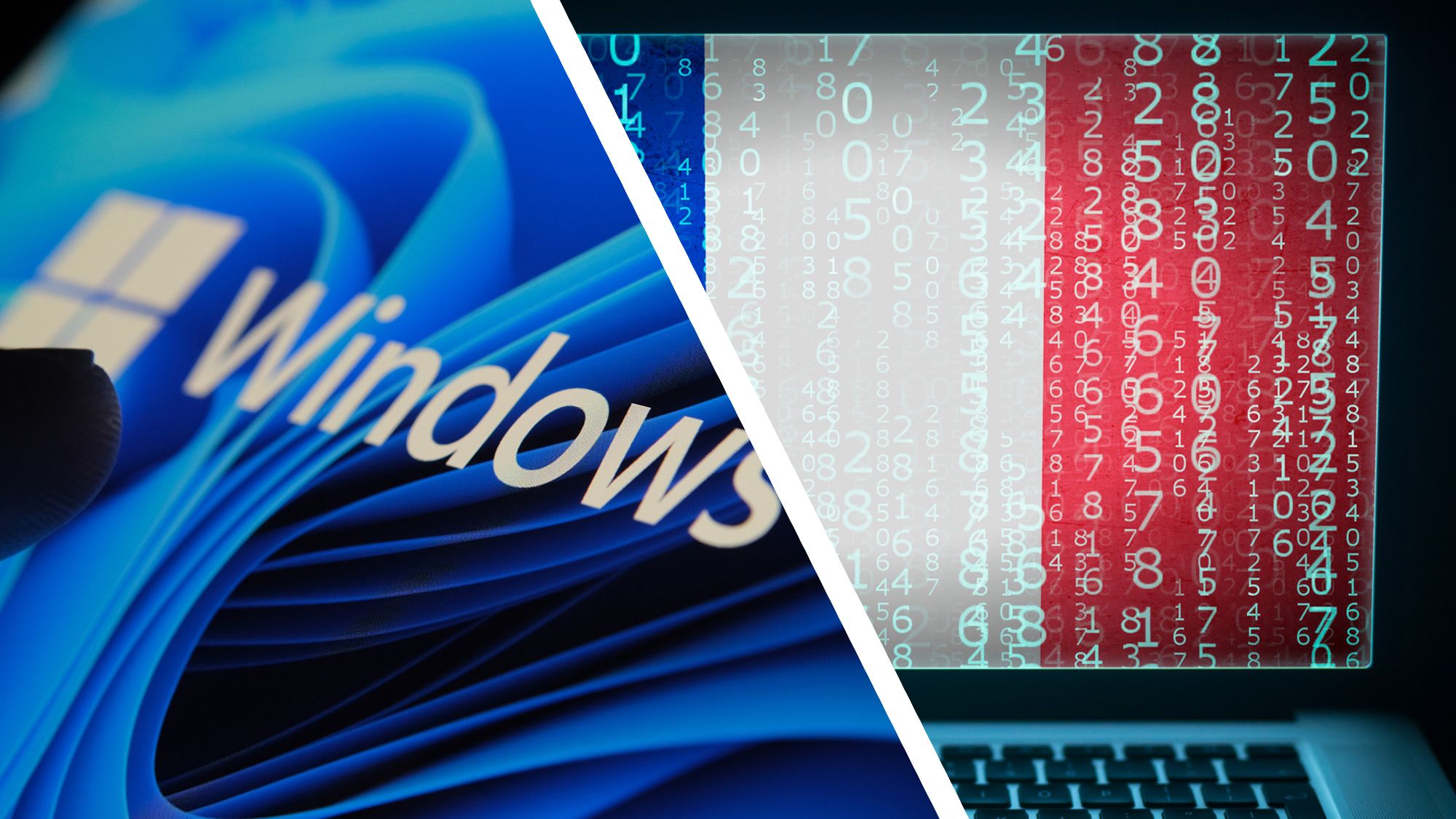
Frances switchted to Linux on 2.5 million PCs

why, great news!
So I suspect they are also dropping their plans to require age verification on social media?
After all, public code repositories which are essential for developing the software they’re switching to are… also a form of social media, correct? Surely they do not want to sabotage its development by requiring those repos to implement costly age verification? Right?
I can tell you one thing: French authorities don’t give a flying fuck about any right to privacy for commoners.
2.5 Million government PCs seems like a lot
i never understood why my Government in Australia doesn’t have a tech division a Linux version to use, Libre Office software etc a messenger service, an email and a Mastodon instance. Doesn’t mean you have to use them by the Governments should and be available to all including our Oceania brothers if they wish including funding them.
Giving up digital sovereignty is beyond my understanding, let alone hosting Government. and financial services on foreign owned cloud services.
Linux? I think we still using windows 10
Yeah not having a government issued email is completely bonkers in this day and age. They should never have allowed Google to fill that gap.
And they will be better served with this solution.
The most important benefit is that a fascist dictatorship can’t brick all your governments computers because an incontinent pedophile got his feefees hurt.
If you think that’s far fetched, you have no idea how mentally-ill and psychopathic fascists are.
Boy I sure do remember a lot of people in the last ten years tell me its completely impossible to run any kind of modern enterprise set up without Windows.
Wow!
They were all fucking wrong!
Who could have guessed!
10 years ago, a significant number of enterprise software was written as windows native apps. What’s changed is now everything is a webapp and linux runs firefox/chrome/chromium/edge/etc just fine.
I’m in the lucky position that I get to run Linux on my work machines in an otherwise Windows environment (helps that I’m in the IT dept). Enterprise apps are actually a lot better about supporting Linux these days. Zoom, WebEx, TigerConnect (healthcare focused HIPAA compliant messenger) all have native Linux versions. Also, the CrowdStrike EDR agent supports Linux too, which was helpful to get approval to run Linux. Support is good in IT specific tools too. VMWare remote console and
VMWareOmnissa Horizon client also support Linux natively, so I use Horizon to connect to a VM when I actually do need Windows. Most of the Cisco management tools that aren’t web based work too, e.g. CUCM RTMT, but they are in Java so not too surprising. The only stickler really is Microsoft products. I use Teams, Sharepoint and Outlook as PWA though, which is good enough for me (do all my actual document editing in LibreOffice though). Typically the only thing I actually need to log into actual Windows VM for is Windows Server Management Tools to manage AD, DHCP, DNS etcAlso, already 10 years ago, corporate backends were pretty much already all running on Linux.
In big companies the stuff running in Windows has long been just been the Views in a multi-tiered Model-View-Controller systems architecture, whilst the data and logic sat in servers.
From my own experience, on the technical side it’s mainly the sunk cost into making the custom frontends in Windows and certain apps used to fill the gaps not covered by corporate systems (for example Excel and Outlook) that have held Windows in place.
On the management side, it’s probably a question of support contracts and friendly rather than professional relationships with specific Windows-only 3rd party vendors.
Not at all denying your point (which I totally agree with), just pointing out that in big enough companies to have their own software developers and proprietary systems, the movement away from Windows has been going on longer than that, just less visible to most people because what was being moved over was back and middle tier stuff.
Whilst people kept dreaming about the Year Of Linux On The Desktop, Linux had, since the 90s, quietly and steadilly been eating away at the responsabilities of software running on the Desktop.
Curious how large organizations are dealing with the lack of tight group policy control that they’re used to on Windows, and users having far more options for circumventing any given restriction.
You do know that it’s possible to set up tight group policy control on Linux right?
Every major distro has some sort of user control built in, and Enterprise distros like Red Hat and SUSE are actually better than Windows.
No you see, only Windows has the concept of permission groups for users, get chown’d, n00b.
Badass.
Goodass
So lucky. I hate W11 so much but dumb software developers keep me walled in
You could try running your windows-locked programs via Wine, Proton, or a VM-based solution for the worst offenders on a Linux distro (unless your employer requires you to run windows on bare metal, and I give you my condolences).
I wonder howuch money the government is saving on Windows licences alone
I just checked Microsoft’s website. They’re trying to make windows enterprise a subscription model. The current cost for what they’re calling “windows 365” is $99/yr per user. They’re saving nearly $250 million a year, or €211 Million
And if they put something like 10% of those savings back into developing more open source tech it would be a huge boost to the global community.
That might be the MSRP, but it’s not what they were paying.
They’re going to have at minimum three different types of “discounts” applied to their price:
- Volume discount
- Government discount
- Tenure discount
If I had to guess, it would knock anywhere from 30% to 60% off MSRP.
The current cost for what they’re calling “windows 365” is $99/yr per user.
Windows 365 Enterprise basic starts $31 per user per month and goes up from there.
I suspect you are confusing Windows 365 with Microsoft 365. The former includes a virtual (Cloud) PC and licensing for Windows and Office, the latter only provides Office licensing. Additionally the price point you quoted makes me think you are looking at Personal / Home pricing because Commercial & Government Office 365 pricing is calculated per user / per month and will vary wildly in price from $10 pu/pm to $50+ pu/pm.
I hate MS product names I hate MS product names I hate MS product names
I’m surprised one of those hasn’t been rebranded to copilot 365 yet

Microsoft 365 Copilot - Sign in - https://m365.cloud.microsoft/
Probably also saving 100 to 200 million euros more in servicing fees. Licenses are but one component of cost models these days for companies. Sure, they will still have to find a vendor to service their Linux systems, but there should be a lot more cost flexibility in that space.
Windows 365 is the “cloud PC” that Microsoft is hosting as a VM in Azure. So you have a thin client that only connects to the VM over the internet. It’s very niche and pretty expensive. Regular windows licenses, especially with their volume of licensing will be a lot less. But they still save millions on licenses, especially for the M365 office licenses that they now no longer need.
I’m seems pretty reasonable for a cloud PC.
I just ran the costs through the Azure calculator, and a D2asV6 system with a 100GB drive and licenseing running 16hrs a day, 30 days a month would cost approximately 1200 dollars annually, so 99 bucks a year seems like a steal.
And a D2asV6 is not a lot of compute power. 2 cores, 8Gb ram.
In summary, Azure is fucking expensive if you are keeping VMs online all the time.
License costs for Windows alone for one single Bundesland in Germany are 15 Mio EUR a year, I read, and that doesn’t include other costs. France is probably paying Microsoft in the hundreds of millions currently. You can do a lot on your own with that kind of money, especially when using everything open source has to offer, as basis.
I’ve always wondered if the money saved from licenses would cover the cost of new full time employees to pick up support, it probably depends on the org size.
It’s not like they don’t need staff to support windows.
I read it as “pick up support for the FOSS projects” as opposed to user IT support.
So, contributing to the FOSS.
Even sponsorship would be awesome, in a “we can’t do the tech stuff, but here is 10% of what we saved” kinda way
Not only that, but also on not upgrading/replacing computers that don’t meet the requirements. Windows 11 runs perfectly fine on higher-end mobile Kaby Lake, but without unsupported workarounds one cannot install it…never mind that you can virtualize Windows 11 on Skylake and older without any issues.
What is saved, gets spent into operational costs now. Many cities tried the switch, had higher expenses and lower productivity, and switched back to Windows. Let’s hope France hired the right professionals for this migration
Fantastic, it’s amazing what you can do when you don’t have billionaires on the stage patting each other on the back and laughing with each election.
If only the muppets in my homeland were half as competent as the bloody French.
Title makes it sound like a done deal but so far there’s a promise that there will be a plan in a few months.
The shift to Linux is happening and every French government ministry is required to put its migration plan in place by the fall of 2026, including considering complementary software such as antivirus, collaborative tools, and so on.
@misk What could maybe work: it should be made law, that 1% (or 10%) of all license cost paid by governmental organizations, must go into open source development, or services. The organization could freely choice, into what, and what it wants to get back.
The shift to Linux is happening
Sounds like the shift to Linux is happening. I’m guessing by law. So, the first step is prep and planning, they aren’t going to back out of it, it just takes time to move an entire government over to a new OS.
Nah, the article is trash. There is no law, ministries have been asked to come up with a plan of what’s possible to do to switch but I highly doubt most will switch. The education ministry recently renewed it’s Microsoft contract and I don’t think there is anything enforcing a switch, it’s only a “please look at what could be possible” thing. The only thing switching for sure is the DINUM, about 250 people, a lot of them already using Linux. But this is the start of an experiment where they are building some NixOS configurations that could be used if a larger switch was to happen.
@misk @not_IO Normally it silently fails on the wall of stupidity, and on the silent, cooperative undermining of the local microsoft activists in all departments. You can be sure, they do not want to learn “yet another system”, they want to retire as a windows sysadm. And they work as a workplace mafia.
Sadly I can not see any good in this direction. Hope I see it badly!
Very cool! France is working towards achieving digital independent from US megacorps, and maybe this means more funding towards the development of open-source software!
Mistral AI!
France for whatever reason tends not to export much tech, so I think many people don’t realize how tech-savvy they have historically always been.